

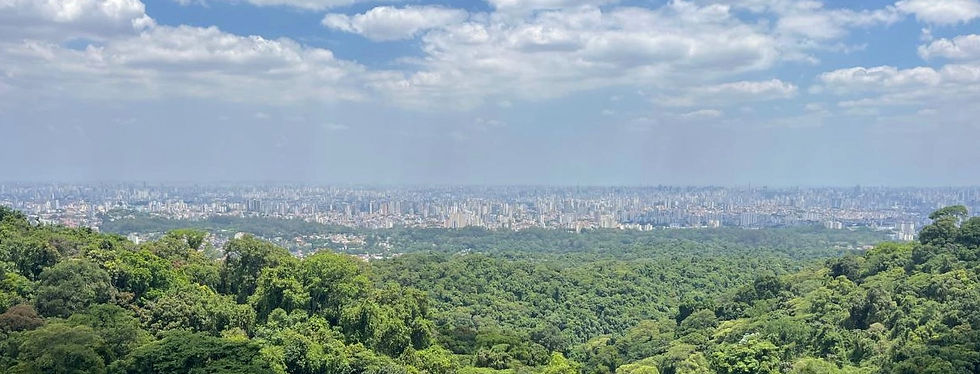

August 26 to 28, 2026
São Paulo – SP
CALLS FOR PAPERS
Important Dates

January 5 – Call for Papers
May 30 – Deadline for abstract submission
July 5 – Announcement of accepted papers
July 10 – Deadline for registration payment
(confirmation of publication)
The best papers will be selected for publication in the journal ENGINEERING AND SCIENCE | ISSN: 2358-5390
Simple Paper Template
Expanded Article Template
Expanded Article Template
Thematic Areas

Biometeorology and Comfort
This theme encompasses investigations on the interactions between climate and humans and animals, focusing on environmental comfort, air quality, and well‑being. Research on the impacts of thermal stress on health, the development of biometeorological indices, and solutions for adaptive urban planning are welcome. Studies that integrate architecture, urban planning, public health, and sustainability policies are essential to promote more resilient and livable cities.

Health, Climate,
and Urban Adaptation
This axis encompasses research on the effects of climate change on human health, including climate‑related diseases, urban adaptation strategies, and public policies. Studies may address thermal stress, population well‑being, and solutions to reduce vulnerabilities in urban areas. The integration of health sciences, urban planning, and governance is essential to face the challenges imposed by global warming.

Sistemas de monitoramento e alerta climáticos
This axis brings together research focused on climate modeling, environmental monitoring technologies, and early warning systems, which are essential for reducing risks associated with extreme events. It includes studies on adaptation and mitigation policies, as well as approaches that integrate science, technology, and governance to strengthen urban and rural resilience. Studies may explore anything from smart sensors and digital platforms to participatory strategies for climate management.

Governance, Tourism, and Recreation
This theme explores how climate governance can influence sustainable practices in tourism and recreation, considering the impacts of climate change on tourist destinations and public spaces. Research may address adaptive planning, climate risk management, and strategies to ensure well‑being and safety in recreational activities, promoting economic development aligned with sustainability.
Organizing Committee
Loyde de Abreu-Harbich
Coordinator
Meteorologista pela Universidade Ludwig Maximilian de Munique (LMU) e doutor pela Universidade Aristóteles de Tessalônica. Foi professor adjunto e pesquisador sênior na Universidade de Freiburg, liderou o Centro de Pesquisa em Biometeorologia Humana do Serviço Meteorológico Alemão (DWD) de 2015 a 2024 e presidiu comissões na Sociedade Internacional de Biometeorologia (ISB), atuando desde 2016 como presidente da Sociedade Alemã para o Avanço da Pesquisa Médico-Meteorológica. Possui mais de mais de 800 publicações indexadas (entre artigos de periódicos, capítulos e anais de congressos).

Kevin Lau
Luleå University of Technology
Climatologista urbano com 15 anos de atuação em planejamento e desenho urbano sensíveis ao clima. Possui experiência interdisciplinar na transferência de conhecimento científico para diretrizes práticas de planejamento, tendo liderado diversos projetos para órgãos governamentais, ONGs e o setor privado. Atualmente, integra a Rede de Especialistas da Organização Meteorológica Mundial (OMM/WMO) nas comissões de Observação, Infraestrutura e Sistemas de Informação, e de Serviços e Aplicações Meteorológicas, Climáticas, Hídricas e Ambientais. Possui mais de mais de 90 publicações indexadas (entre artigos de periódicos, capítulos e anais de congressos).

graduado em Matemática pela Universidade de Düsseldorf (Alemanha, 1991) e integra a equipe científica do Instituto Leibniz de Pesquisa em Ambiente de Trabalho e Fatores Humanos (IfADo), atuando como pesquisador associado desde março de 1991. Com trajetória inicial como assistente acadêmico no Instituto de Medicina Ocupacional de Düsseldorf (1984–1990), desenvolve pesquisas com foco na área de Imunomodulação, possuindo ampla produção científica indexada.
Organizing Committee

Loyde de Abreu-Harbich
Coordinator
Universidade Presbiteriana Mackenzie, Faculdade de Arquitetura e Urbanismo - São Paulo - SP

Eduardo L. Krüger
Scientific Coordinator
Universidade Tecnológica Federal do Paraná (UTFPR), Departamento de Construção Civil, Curitiba - PR

João Paulo Assis Gobo
Universidade Federal de Rondônia (UNIR), Departamento de Geografia, Porto Velho - RO

Ana Carla dos S. Gomes
Universidade Federal do Oeste do Pará (UFOPA), Instituto de Engenharia e Geociências, Santarem- PA

Fábio Teixeira Gonçalvez
Universidade de São Paulo (USP), Departamento de Ciências Atmosféricas / Instituto de Astronomia, Geofísica e Ciências Atmosférica - São Paulo - SP

Marina Piacenti-Silva
Universidade Estadual de São Paulo (UNESP), Faculdade de Ciências - Câmpus de Bauru - Bauru -SP

Anderson Spohr Nedel
Universidade Federal da Fronteira Sul (UFFS), Faculdade de Agronomia, Cerro Largo, Rio Grande do Sul

Ivan Julio A. Callejas
Universidade Federal de Mato Grosso (UFMT), Departamento de Arquitetura e Urbanismo, Cuiabá- MT

Sheila T. Nascimento
Universidade Estadual Paulista (UNESP), Faculdade de Ciências Agrárias e Veterinárias (FCAV) - - Campus de Jaboticabal – Jaboticabal - SP
Organizing Committee
-
Adriana Polachini do Valle (Universidade Estadual Paulista - UNESP)
-
Ana Carla Gomes (Universidade Federal do Oeste do Para - UFOPA)
-
Anderson Nedel (Universidade Federal da Fronteira Sul - UFFS)
-
Artur Gonçalves (Centro de Investigação de Montanha, Instituto Politécnico de Bragança- CIMO-IPB -)
-
Camila Araujo de Sirqueira Souza (Universidade Federal da Alagoas- UFAL)
-
Carla Fernanda Barbosa Teixeira (Universidade Federal de Sergipe- UFS)
-
Carolina Lotufo Bueno-Bartholomei (Universidade Estadual Paulista - UNESP)
-
Diana Carolina Jesus de Paula (Arquitetura e Urbanismo do Centro Universitário de Várzea Grande (UNIVAG)
-
Eduardo Leite Krüger (Universidade Tecnológica Federal do Paraná - UTFPR)
-
Eduardo Raimundo Dias Nunes (Universidade Federal Rural do Semi-Árido - UFERSA)
-
Eliane Silva Barbosa (Universidade Federal do Rio de Janeiro - FAU/UFRJ)
-
Erico Masiero (Universidade Federal de São Carlos - UFSCar)
-
Fábio Luis Teixeira Gonçalves (Universidade de São Paulo - IAG/USP)
-
Iara Nogueira Liguori (Universidade de São Paulo - FAU/USP)
-
Ivan Julio Apolonio Callejas (Universidade Federal de Mato Grosso - UFMT)
-
João Paulo Assis Gobo (Universidade Federal de Rondônia - UNIR)
-
Loyde Abreu-Harbich (Universidade Presbiteriana Mackenzie - FAU Mackenzie)
-
Márcio Pinheiro (Universidade Federal da Fronteira Sul - UFFS)
-
Marina Piacenti da Silva (Universidade Estadual Paulista - UNESP)
-
Matheus Menezes Oliveira (Universidade Federal de Sergipe - UFS)
-
Paula Lelis Rabelo Albala (Universidade de Brasília - UNB)
-
Regis de Castro Ferreira (Universidade Federal de Goiás - UFG)
-
Reinaldo Paul Pérez Machado (Universidade de São Paulo - FFLCH/USP)
-
Rejane Magiag Loura (Universidade Federal de Minas Gerais - UFMG)
-
Sheila Nascimento (Universidade Estadual de Maringá - UEM)
-
Solange Maria Leder (Universidade Federal da Paraíba - UFPB)
-
Stefani Daiprai Cerutti (Universidade Tecnológica Federal do Paraná - UTFPR)
-
Vinícius Fonseca (Instituto Federal Baiano - IF Baiano)
EVENT

NOn August 26, 27, and 28, 2026, the Mackenzie Presbyterian University, Higienópolis campus, will host the III Brazilian Symposium on Human Biometeorology.
The event workshops will take place prior to the official opening, on August 24 and 25, 2026.
Further information coming soon.
Schedule


Promotion
Organization
Sponsor


